For many years, I lived with a mental ‘to-do’ list. Household tasks, childcare duties, work commitments, and relationships all demanded my time and attention. I thought life was quiet when half a dozen, rather than the usual two dozen things, vied for my attention. In the evening, as I reviewed my day, I’d pat myself on the back, reassuring myself that I’d been busy and productive.
The busyness that filled my days was imposed by both others’ expectations and my own. I finished projects ahead of deadlines and made decisions quickly. Rather than reduce the to-do list, it meant the addition of tasks to the list that otherwise would not have made the cut. I was proud when others described me as effective, efficient, and reliable. In my eyes, I was a failure if I disappointed someone. I feared being of no value if I wasn’t needed.
My mind was frequently busy considering prior conversations and assessing what had been said. This meant I was generally ‘too busy’ to be bothered by my body’s physical signals for attention. I seldom noticed a strain or ache, until my body escalated it to a full-on injury to make me listen. Weariness became exhaustion before I’d rest. A headache simply meant taking medication to blunt it and working harder to focus on my task.
After more than 45 years of constant busyness and being ignored, my body said ‘enough.’ I wish I’d listened to its call for respect before it had to shout to get my attention. Instead, I had to journey through the recovery from a mental health breakdown in order to find the more incarnationally centred life I now live. I am thankful to have gotten here—but I do not recommend the route I took.
Recovery, for me, was learning how to be in the world differently. That reorientation has affected every area of my life. Life is calmer and slower. It is sustainable and deeply satisfying. It is grounded in the senses—in my body’s response to the world. Being human is not only good enough, but everything. I am now a participating witness in life, encountering God’s presence in mundane moments. I no longer fight and wrestle God at every turn, trying to control what is His responsibility—and I’ve come to accept that’s most things. I now infrequently have a plan for the future, and even less often a backup to it. I have learned to trust that future-me will be okay meeting what comes her way. I trust it will be something good, and know, if it’s challenging, God will send help my way.
I listen for my body’s wisdom and respect her input now. I rest when I’m tired and attend to minor health issues more promptly. I’m less embarrassed when tears or loud laughter punctuate my conversation, recognizing it is my body processing large emotions. Rather than relying on fast, convenient food, my hunger is now satisfied with more nutritious and flavorful choices.
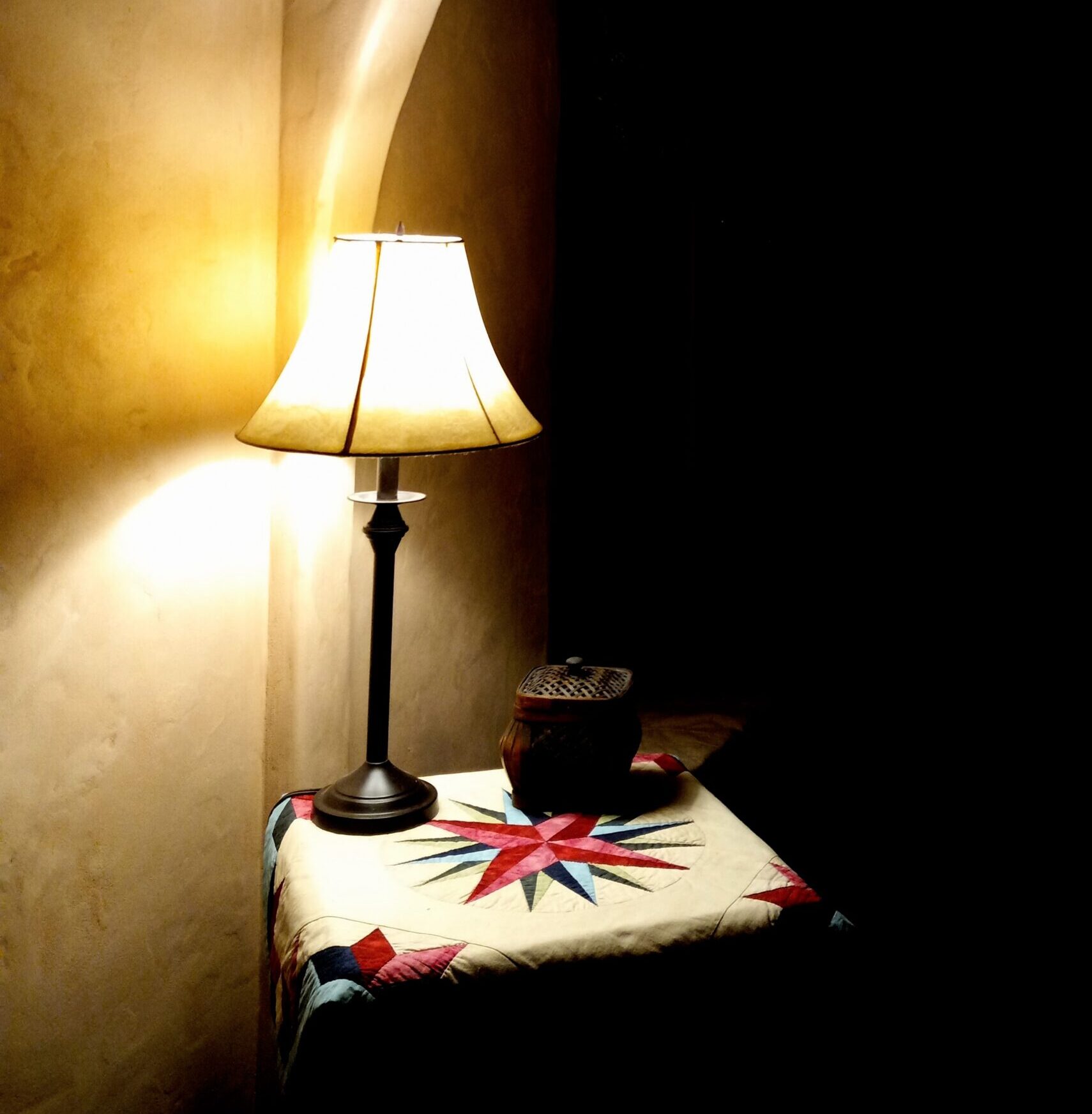
Projects generally take longer, but I enjoy the process—not simply the outcome. I used to resent it if a quilt was taking more than a month to complete. I would devote hours of work each evening and weekend to power through what was supposed to be a leisure activity. Now it doesn’t matter if it takes a year or two. I savour each step, setting the project aside when it’s not engaging, and celebrate each step. Eventually, the quilt is finished.
How much I anticipate enjoying an activity now influences my decisions. I take long rambling walks in the autumn so I can revel in the scrunchy sound made by the leaves as I walk through them. A chance meeting at the post office or after church may turn into lunch with a friend. A restaurant may be chosen for its ambiance as much as its menu.
I notice physical details. I become enthralled watching the tiny bubbles clinging to the bottom of a pan while I wait for the water to boil. This flower, with its damaged petal, is as beautiful in its uniqueness as that one with its light blue tint. I notice the sunbeam as it slowly moves across the altar during worship.
It is not just my relationship with the material world which has shifted. I now take the time to interact with people as individuals. Exchanging books at the library often includes a half-hour visit with the librarian, perhaps hearing of her garden, her current read, or a family member’s health. In the spring, a trip to the local dump with garbage wouldn’t be complete without hearing an update from the attendant on the number of goats born on his farm.
The present moment, whatever it holds, is the one I try to live in. Instead of asking “why?” I focus my energy on my response. When I’m ill, I shower myself with creature comforts and TLC. I offer practical assistance when a neighbour suffers an injury. Sudden interruptions in my day, like needing to wash my dog after she’s been sprayed by a skunk, are reframed as invitations to notice and give thanks to God for the complexity of creation.
A good day is now measured by how present I have been. When I review my day, I ask questions like ‘Where did I feel most alive?’ ‘Where did I see God?’ and ‘How was I surprised by God?’ The answers are often simple, small, and seemingly insignificant moments—feeling the cold wind on my cheeks, or when my dog, who runs free, returns to check on me if I’ve been too long absorbed in taking a photo during our walk in the woods.
The shift to a more incarnational life has also changed my understanding of meaning and purpose—now it comes from witnessing Love’s presence changing the world. My role is mainly to stay out of her way and watch what unfolds. I notice her in people’s words, like the community member quietly praising and thanking the summer student who was hired to water the plants on Main Street. Love is present when the hydro worker walks the extra 10 feet down the ditch, picks up the littered can, and tosses it into the back of his truck before pulling away. I know Love has been present when I stop to stretch my legs at a heritage cemetery and find the grass cut and the flowering hedge trimmed.
Even my vocal prayers have changed. They now share my emotional responses to what I’ve witnessed with Christ. Sometimes they’re whispers of awe; other times they are screams of frustration. But usually, they are simple gratitude for all that is.
Even though I discovered this incarnational world by a route I cannot recommend, I now believe three things let me access it. First, I focus my attention on the here and now—what am I actively doing? Second, I look for God in the physical world where our bodies are currently existing—what am I experiencing through my senses of sight, touch, smell, hearing, and taste? And then the final, third step is to look at the details—it’s where God hides himself in plain sight. What specifically makes this fingertip different from that fingertip? When you sense awe, wonder, gratitude, or surprise—you’ve likely caught a glimpse of God incarnate. Persistence and practice may be needed, but like any skill, with practice it can be learned.
Before my breakdown, I worshipped the incarnate God in the sacraments and corporate worship. I still do. But I no longer disregard my embodied reality. I hope you’ll join me in looking for His incarnational presence in our lives.