News

The Proximity of Heaven and Earth: Divinity imbued in nature

The last time I wrote, we were in the depths of Holy Week, entering into the sublime solemnity of that festival. Today, I write to you from the stark and simultaneously bright Dawson City, Yukon. This town sits amidst snow-dusted mountains and at the confluence of the Yukon and Klondike

May Issue: Word Made Flesh

If there is one thing that all our authors draw attention to, it’s to be attentive. Be attentive to where God is, regardless of whether those places are expected or unexpected. Anil Pinto-Gfroerer reminds us that God is present in conversation, questions, and in the beauty of the created world.

Humility — Walking a Pathway of Gratitude and Servanthood

In our Christian faith, humility is rooted in the very character of God revealed in the life of Jesus Christ. In this reflection, I will explore humility through an Indigenous Christian lens and attempt to find some common threads that bring our understandings together. The Indigenous People of this Land

Receiving the Fragrant Oil: The art of humility

Today, I speak to you from the depths of Holy Week. Maundy Thursday is nigh upon us, and I have entered this week in the way I do all Holy Weeks – scattered and a bit destroyed from the wiles of March. If you are like me and have found

The Humility of St. Antony

In the fourth year of my undergrad, I took a course titled “Prayer in the Christian Tradition.” In this course, we looked at various figures, praying styles, and books referring to prayer (a number of which I have referenced in my previous articles). One that caught my attention was a

April Issue: Throned in Humility

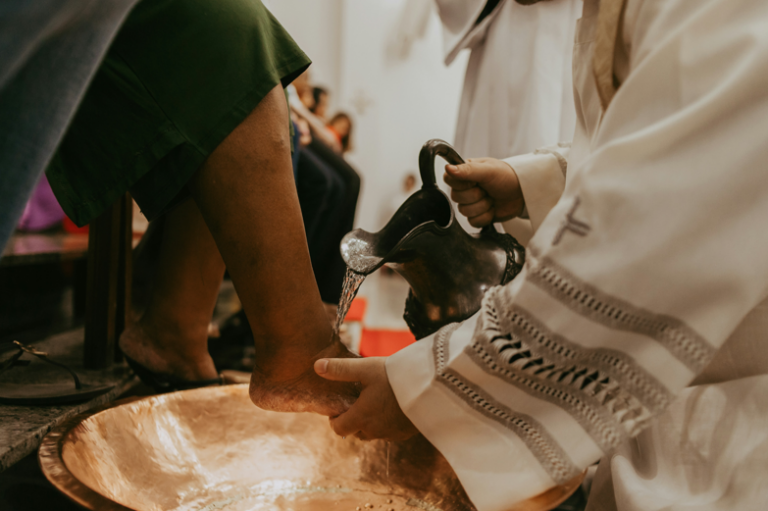
  Our authors all provide different viewpoints on where humility can be found and what it means for each of them. Anil Pinto-Gfroerer presents Maundy Thursday’s foot washing as an example of humble service. Ben Girgis tells of the life of St. Antony the Great and how he (and those

The Incomprehensible Mystery

My brother, Jesse, was the kind of guy who could make friends with anyone. His unconventional perspective and non-judgmental attitude meant he could find ways to connect with others, no matter their age or their background. His inventive and creative spirit kept everyone on their toes, as he found uses

Faith in Times of Suffering

Suffering is an unfortunate part of life. As Christians, we sometimes wonder why there is suffering in the world, and why we who are children of God experience suffering ourselves, but even Jesus Christ suffered persecution and death for our salvation. The types of suffering are innumerable, from infertility, financial

Faithful Suffering

If you have read the last two issues of RLN, you will be unsurprised that when asked to discuss how faith helps us to manage suffering, my first response is to ask what we mean by faith and suffering. Especially where these words encompass not only what we believe, but

The Meaning of Mothering Sunday

Anybody who believes that the Anglican Church resists change, by and large, does not know the story of the evolution of Mothering Sunday, and thereby hangs a tale. I hope with this article to set the record straight because the initial reason for declaring the fourth Sunday of Lent as

March Issue: Via Dolorosa

As our three authors—Melissa Ritz, Obren Amiesimaka, and Zoe Matties—give us their own perspectives and thoughts on the nature of suffering in human life, they all highlight the valuable lessons which Scripture teaches us in helping us navigate the most difficult parts of our lives. With Scripture, we always have

What Does it Mean to Love Our Enemies?

Today I am not feeling very loving. Today, I am filled with rage at the state of the world. An innocent mother was just shot dead by an agent of the government, the despot over the border has said [insert the latest craziest thing you’ve heard him say here], and

Love Our Enemies? Yes!

The idea of loving our enemies can be tough. Some might say it is easy in theory, or when one has not been deeply, glaringly, and unjustifiably wronged. It is not unusual, in human frailty, to want those who have hurt us deeply to experience pain too—to know what it

And Who Is My Enemy?

When thinking about what it means to love one’s enemy, I am immediately reminded of the man who asks Jesus, “and who is my neighbour?”[1] Ultimately, Jesus’ answer is not a description of what a neighbour is, but a command to “Go and do likewise”[2] to the Samaritan who went

February Issue: To Love Your Enemy

  Loving our enemies is one of Jesus’ teachings that is vital, yet difficult. At its core, loving one’s enemy demonstrates the belief that no person is entirely reducible to their worst acts, and that reconciliation is possible. The refusal to hate and dwell in vengeance preserves the integrity of

Hope is a Practice

Near the beginning of my undergraduate studies, I had the opportunity to go on a study tour to the Holy Land. We visited many churches, archaeological sites, and museums in both Palestine and Israel. We also talked with many people—Jewish, Muslim, and Christian—to learn about their lives. On one hand,

“All Our Hope On God Is Founded”

‘All my hope on God is founded; He doth still my trust renew. Me through change and chance He guideth, Only good and only true. God unknown, He alone Calls my heart to be His own.’ This hymn by Joachim Neander (English translation by Robert Bridges) is a most popular

CURRENT ISSUE

Word Made Flesh

If there is one thing that all our authors draw attention to, it’s to be attentive. Be attentive to where God is, regardless of whether those places are expected or unexpected. Anil Pinto-Gfroerer reminds us that God is present in conversation, questions, and in the beauty of the created world. Krista Waring and Rev. Deacon Tanis Kolisnyk honour the memory of Elder Rev. Barbara Shoomski by speaking to the many of the ways in which she showed incarnational love to so many who were lucky enough to encounter her. The Right Reverend Rachael Parker reminds us that we are called to be Christians, “little Christs,” and continue the work of Jesus as best as we can. Lastly, Donna Royer reminds us to notice and savour the presence of God whenever we can—in ways big, but more notably, in ways we may deem “small.”