News

What is Hope? Melissa Ritz’s Response

My simple answer to the question, “What is hope?” is that hope is a belief about the future that combines expectation and desire. In other words, it is a belief that a positive outcome is in the offing, with at least some assurance that the hoped-for outcome will indeed come

January Issue: Hope

  What is hope, and how does it shape our lives? As we return to the “Faith Matters” series, our three new authors—Melissa Ritz, Obren Amiesimaka, and Zoe Matties—seek to offer insight into this question. While all of them have their own unique perspectives on this subject, they directly or

A Year of Anglican Poetics

The 20th-century poet T.S. Eliot first gained popular attention with the publication of his poem “The Love Song of J. Alfred Prufrock.” Often cited as one of the key touchstones in the creation of the modernist style, Eliot began to develop a paradox of articulate inarticulacy that would pervade his

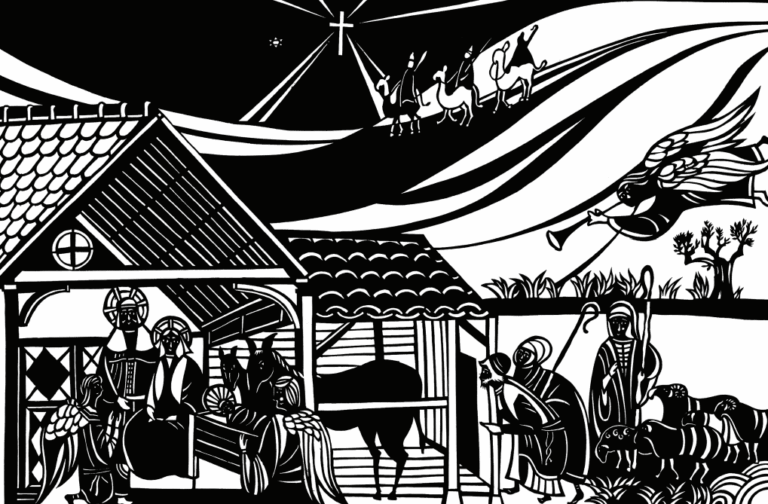
December Issue: Word and Wonder

This issue contains an Advent message from Bishop Naboth, reflections on a year of the Anglican Poetics Project by Ryan Turnbull, and reader-submitted poetry. Some poets who submitted have been writing for years, spending a great deal of time and energy on honing their craft. Others have just started—maybe in

Why Do We Pray? Kirsten Pinto-Gfroerer’s Response

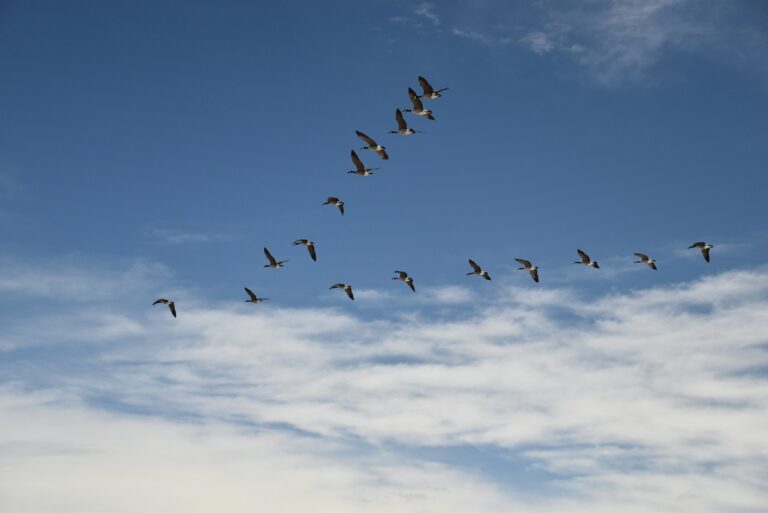
  We live between the feeding and watering grounds of migrating Canada Geese—one of many resting places on their way to the south. From early September until now, these birds have been an intimate part of our daily life. They crowd the skies, filling them with the pulsing energy of

Why Do We Pray? Edmund Laldin’s Response

The premise of this article is to articulate and present a cogent submission on prayer and our need to pray. Furthermore, it will explore what our prayers should be and whether God answers them. The conclusion will endeavour to connect with my previous articles on attending the church and partaking

2025 Advent & Christmas Services

All Saints (521 Broadway Ave) Sunday, December 21, at 11:00 am: Choral Service of Lessons & Carols. Wednesday, December 24, at 4:00 pm: All Ages Family Service. Wednesday, December 24, at 11:00 pm: Candlelit Choral Midnight Mass. Thursday, December 25, at 10:00 am: Christmas Eucharist.   St. Aidan’s (274 Campbell

Why Do We Pray? Ben Girgis’ Response

I often think of the words of Christ, “But whenever you pray, go into your room and shut the door and pray to your Father who is in secret, and your Father who sees in secret will reward you.”[1] Do not be like the “hypocrites, for they love to stand

Why Do We Pray? Amanda McKenzie’s Response

In order to know why we pray, it is important to understand what prayer is. Prayer is an act of communicating with our higher power. Many people have a lot of different names for this higher power—Yahweh, Allah, Abba, and so on. I refer to this higher power by many

November Issue: Why Do We Pray?

As we conclude the first three-part series of Faith Matters, exploring why we pray (and what prayer is), I would like to reiterate the purpose of this endeavour. Every person who reads this magazine has some kind of relationship with God and with the Anglican Church in the Diocese of

Why Do We Celebrate the Eucharist? Kirsten Pinto-Gfroerer’s Response

Several years ago, when I was a catechist in an Anglican parish, I had the privilege of working with an eight-year-old boy who wanted to be baptized. This was a common phenomenon in the parish where I worked. Congregants had come to the parish from other denominations, including some from

Why Do We Celebrate the Eucharist? Edmund Laldin’s Response

In my previous article, responding to the question “Why go to church?” I argued the following: The church provides a loving, caring, and like-minded community for the participant. There might not be a clear demarcation between the sacred and the profane, since the whole universe is God’s creation. Every human

Why Do We Celebrate the Eucharist? Ben Girgis’ Response

By now, you, the reader, have come to understand that I enjoy eating meals with people. At this point in my life, it is the only way I can spend time with people without having to pick up a new hobby. It’s a great chance to meet people in an

Why Do We Celebrate the Eucharist? Amanda McKenzie’s Response

The word Eucharist itself comes from the Greek word meaning “thanksgiving,” and I am so very thankful that I received knowledge of the meaning of the Eucharist when I was confirmed at age twelve. I understood that we do this in memory of Jesus dying on the cross for our

October Issue: Why Do We Celebrate the Eucharist?

As our four authors, Amanda McKenzie, Ben Girgis, Edmund Laldin, and Kirsten Pinto-Gfroerer, continue this series titled “Faith Matters,” this issue focuses on why we celebrate the Eucharist. While theological discussion and historical outlines are a wonderful thing, the purpose of asking this question to our authors goes beyond traditional

Why Go to Church? Kirsten Pinto-Gfroerer’s Response

Near the end of his Confessions, St. Augustine wrote, My love is my weight. I’m carried by it wherever I’m carried. Through your gift we catch fire and are carried upward; we go up in flames, and up we go. In our heart we ascend the ascending staircase, and we

Why Go to Church? Edmund Laldin’s Response

In the post-modern and post-Christendom world, the archaic reasons to attend church are invalid and foreign to fellow pilgrims. People are going to churches to experience community, unity in the diversity of opinion and lifestyle, and to be nurtured and strengthened by God’s word, so that they may love others

Why Go to Church? Ben Girgis’ Response

Why do we go to church? That seems to be the question each September as the summer comes to an end, and we go back to a normal schedule. I think there are a lot of reasons to go to church; it’s a social place with lots of activities. The

CURRENT ISSUE

Word Made Flesh

If there is one thing that all our authors draw attention to, it’s to be attentive. Be attentive to where God is, regardless of whether those places are expected or unexpected. Anil Pinto-Gfroerer reminds us that God is present in conversation, questions, and in the beauty of the created world. Krista Waring and Rev. Deacon Tanis Kolisnyk honour the memory of Elder Rev. Barbara Shoomski by speaking to the many of the ways in which she showed incarnational love to so many who were lucky enough to encounter her. The Right Reverend Rachael Parker reminds us that we are called to be Christians, “little Christs,” and continue the work of Jesus as best as we can. Lastly, Donna Royer reminds us to notice and savour the presence of God whenever we can—in ways big, but more notably, in ways we may deem “small.”